Work
How to Track Business Expenses and Receipts Without Stress
By MAXORI Studio · Updated 12 October 2026 · 5 min read
The easiest way to track business expenses is to record each one within a few days, keep the matching receipt under a consistent name, and spend 30 minutes at month end checking everything against your bank statement. Small, regular habits beat a yearly scramble. Below is a routine that works with a spreadsheet or a simple app.
What to record for every expense
Decide on a short, fixed set of fields and use it every time, so entries stay comparable and easy to hand over later.
- Date of payment and the supplier name.
- Amount, currency and how you paid (card, bank transfer, cash).
- Category, such as software, travel, supplies or fees. Keep the list short.
- A one-line purpose: what the cost was for.
- A receipt reference, so you can find the document in seconds.
Naming and filing receipts
A receipt you cannot find is almost as bad as one you never kept. Pick one structure and stick to it. A common pattern is year-month-day, supplier, amount, for example 2026-10-03_OfficeSupplier_45.90.pdf, saved in a folder per month.
Photograph paper receipts on the day, because thermal paper fades. Store the digital invoice you receive by email in the same folder. Use the same name or number in your expense record, so each line points to exactly one document. Keep a backup copy in a second place.
A monthly close routine in five steps
Block a fixed slot early in the next month and work through the same checklist each time.
- Enter any expenses still missing, using your card and bank statements as the source of truth.
- Match each entry to a receipt and mark the ones still missing, then chase the supplier or write a short note.
- Compare the balance of each account in your records with the balance on the statement. Investigate any difference before moving on.
- Review categories for obvious mistakes, such as a personal purchase mixed in with business costs.
- Save a dated copy of your file as a backup for that month.
Mileage and vehicle costs
If you use a vehicle for work, a trip log is easier to keep as you go than to rebuild later. Record the date, the start and end odometer readings, the purpose and whether the trip was business or personal. From the odometer you get the distance and the business share.
Log vehicle costs in the same place: fuel, insurance, servicing, repairs, parking and tolls. Which part you may claim, and at what rate, depends on your country and situation, so check that with your accountant rather than assuming.
What to hand your accountant
Ask what format they prefer, then send the same package each period. In most cases it helps to include:
- Your expense list with date, supplier, amount, category and purpose.
- The receipts and invoices, named so they match the list.
- Bank and card statements for the period, with any reconciliation notes.
- The mileage log and vehicle cost totals, if relevant.
- A short list of unusual items: large purchases, loans, refunds or anything you are unsure how to classify.
Common mistakes to avoid
Waiting until the end of the year is the biggest one: details are forgotten and receipts are lost. Others are mixing personal and business spending in one account, keeping receipts in a drawer without a record, using too many categories, and treating a zero difference at reconciliation as proof that everything is complete. Large purchases, loans and taxes often need professional classification. Rules for what you must keep, and for how long, differ by country, so ask your accountant.
Questions
How often should I record business expenses?
Weekly is a good rhythm, and at the latest within a few days of the payment. Do a full check once a month.
Do I still need paper receipts if I have a bank statement?
A statement shows that money left your account, but not what it was for. Rules on which documents you must keep differ by country, so confirm with your accountant.
How should I name receipt files?
Use a consistent pattern such as date, supplier and amount, and give the same reference in your expense record.
Is this tax or accounting advice?
No. It is a general routine. What is deductible and how long to keep records depends on your country, so ask your accountant.
Ready-made tools for this
Expense and Receipt Desk is an offline browser app for recording expenses and a manual receipt checklist; receipt references are plain text and documents are not attached. Bookkeeping & Month-End Check and Mileage & Vehicle Cost Tracker are Excel workbooks, for comparing account balances with statements and for logging trips and vehicle costs. They are not accounting or tax software.
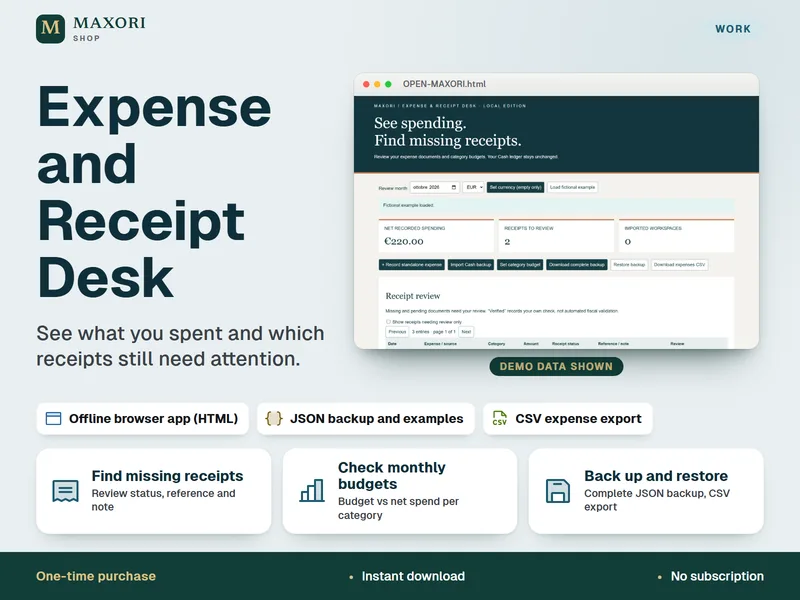
Expense and Receipt Desk – Offline Expense Tracker
See what you spent and which receipts still need attention.
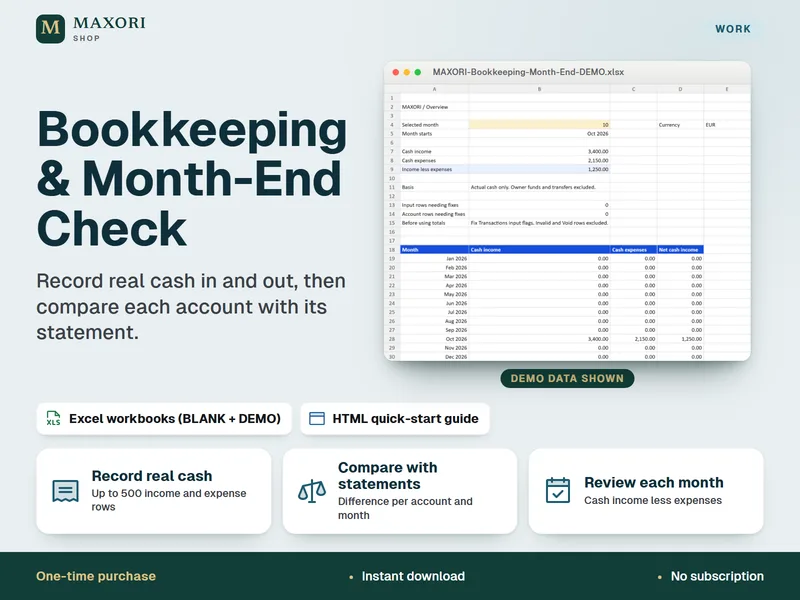
Bookkeeping & Month-End Check – Small Business Excel Spreadsheet
Record real cash in and out, then compare each account with its statement.
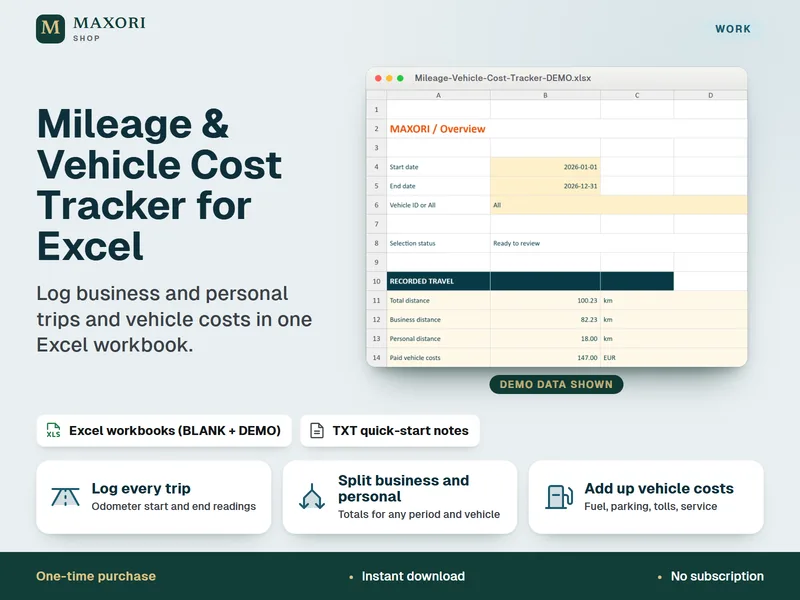
Mileage & Vehicle Cost Tracker for Excel – Trip Log and Costs
Log business and personal trips and vehicle costs in one Excel workbook.