Hospitality
Airbnb Damage Report Template: What to Record and How to Write It
By MAXORI Studio · Updated 15 October 2026 · 6 min read
When something is broken or missing after a stay, a clear written record helps you stay calm and factual. A good damage report lists what you found, when, where and with what evidence, and leaves the conclusions for later. This guide covers what to include, how to collect evidence and how to word the first message to the guest.
Why a written report helps
Memory fades and details blur, especially with several turnovers a week. A report written on the day records the facts while they are fresh and gives you one place to find them later.
It also keeps your tone neutral. Filling in fields about what, where and when is easier than writing an angry message, and the guest receives facts instead of accusations.
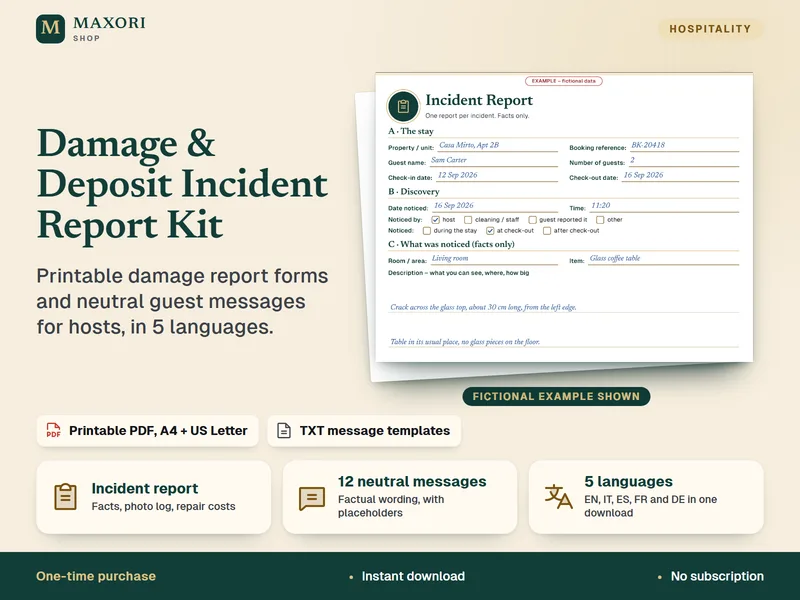
What a damage report should contain
Keep it short and factual. These are the fields that matter most:
- Property name, booking dates and the guest name as it appears on the booking
- Date and time you found the issue, and who found it
- The room and the exact item or area affected
- A plain description of what you see, without guessing the cause
- The condition recorded before the stay, if you have an inventory or check-in photos
- Photos or a short video with the date, taken from a wide view and then close up
- The cost to repair or replace, with a quote or receipt when you have one
- What you have already done, such as removing the item or arranging a repair
How to document the incident
The order you work in matters. A simple routine keeps the evidence clear:
- Do not move or repair anything before taking photos, unless it is a safety risk.
- Take a wide photo to show the location, then close-ups of the damage.
- Compare with your check-in photos or inventory for the same area.
- Write down the facts in the report the same day.
- Keep receipts and quotes for repair or replacement together with the report.
- Send the guest a short, neutral message through the booking platform, so there is a record of the conversation.
Writing the first message to the guest
Open with the facts and a question, not a conclusion. Say what you found, when, and that you have photos, then ask whether the guest can explain what happened. Many incidents are accidents the guest is happy to discuss.
Example: Hello, thank you for staying with us. When we checked the apartment after your departure, we found that the glass in the bathroom shelf is broken. We have attached photos. Could you tell us what happened so we can decide the next step together? Keep the message polite and avoid any amount or threat in the first contact.
Deposits, platform rules and local law
How deposits, damage claims and guest liability work depends on your country, your platform and your booking terms, so adapt every step to the rules that apply to you. Follow the platform's process and deadlines for reporting a problem.
This guide is general information about keeping good records. It is not legal advice, and a report does not by itself decide who is responsible. For disputes or large amounts, ask a qualified professional or your insurer.
Questions
How soon should I write the damage report?
As soon as you find the issue, ideally the same day, while details are fresh and before the next guests arrive. Platforms often have a time limit for reporting problems, so check yours.
Do I need photos from before the stay?
They are very useful. Photos or an inventory from check-in let you show what the item or area looked like before, which makes the record clearer for everyone.
Should I mention the cost in the first message?
Many hosts prefer to describe the facts first and discuss costs once the guest has replied. Follow the process of your platform and your booking terms.
Is a damage report a legal document?
No. It is a clear record of what you found. Its legal value depends on local rules, so ask a qualified professional if a dispute arises.
Ready-made tools for this
The Damage & Deposit Incident Report Kit is a one-time digital download with printable PDF forms (A4 and US Letter, blank and with a fictional example) and a TXT file with 12 message templates for guests, staff and suppliers. It comes in English, Italian, Spanish, French and German. It is a set of general templates, not legal advice.